+91 9967504207 / +91 9987244208 avonprojectscon@gmail.com Mon - Sat 10:00 - 08:00
Rate this post
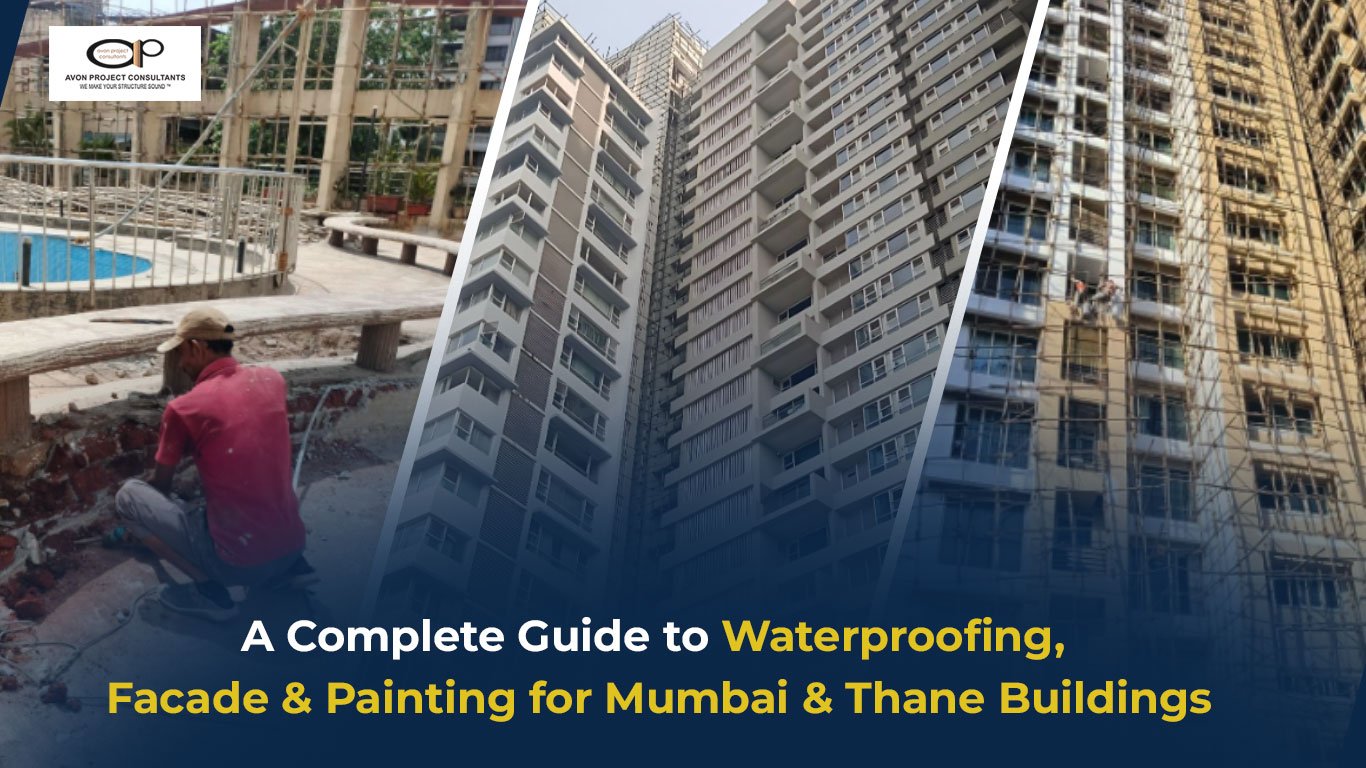
Complete Guide to Podium Waterproofing, Facade & Painting for Mumbai & Thane Buildings
Monsoon is around the corner and if your building had a seepage issue last year, that ghostly yellow-brown patch on the wall is probably still fresh in your memory. Spoiler alert: it’s coming back. Every single year, unless someone actually fixes the root cause.
Mumbai and Thane’s humidity, salty coastal air, and four straight months of relentless rain form a slow-motion stress test for any building. Cracks you can’t see let seepage travel inward long before it shows up on a wall and by the time it does, it’s usually the biggest agenda item in the next society meeting: “What do we do about the waterproofing?”
This guide covers the five things every housing society, builder, and facility manager should understand because ignoring even one of them can turn a small repair into a five-times-costlier structural problem.
Podium Waterproofing — Where Most Problems Start
Choosing the right podium waterproofing system is important because the podium is exposed to moisture, vehicle movement, and drainage issues.
The podium slab is the area separating parking or garden spaces from the floors above — and it’s one of the most vulnerable zones in any building. Why? Because it combines vehicle load, constant moisture from planter boxes, and multiple pipe penetrations, all in one exposed surface.
A common mistake is applying just a top coat without addressing proper slope and drainage. The result: the same leakage returns within two years, often as water dripping onto a parked car below.
What a proper podium waterproofing job actually involves:
- Surface preparation and crack filling before any membrane goes down
- A flexible waterproofing membrane that can handle vehicular movement and vibration
- Correct slope for water drainage so water doesn’t pool and stagnate
- Separate, careful treatment of pipe and drain penetrations
- A protective screed coat so the membrane doesn’t get punctured over time
Cutting corners on podium waterproofing is one of the most expensive mistakes a society can make redoing an entire podium later costs four to five times more than doing it right the first time.
Basement Waterproofing — Fighting Pressure From the Wrong Side
Basement waterproofing is a different challenge because water attacks from the “negative side” meaning it pushes in from outside the structure. Whether it’s a high groundwater table or nearby construction activity, both situations increase hydrostatic pressure on basement walls.
Warning signs that shouldn’t be ignored:
- Damp patches near wall corners
- A musty smell that gets stronger with humidity
- Efflorescence the white, powdery salt deposits that form on walls
- Peeling or bubbling paint on basement ceilings
Basement waterproofing typically combines crystalline coatings, injection grouting (injecting polyurethane or epoxy through cracks), and external tanking membranes. If the basement is used for commercial parking or storage, this treatment also protects structural integrity prolonged moisture exposure can corrode the reinforcement steel inside concrete over time.
High-Rise Building Facade Work — More Than Just Looks
The facade isn’t just about a building’s appearance it’s the primary defense layer against weather. In Mumbai and Thane’s high-rises, facade issues typically show up in a few recurring spots
- Plaster cracks and spalling — where the concrete cover breaks away and exposes the rebar underneath
- Tile or cladding delamination — detectable when tiles sound hollow on tapping
- Seepage around window frames — usually caused by improper or degraded sealant
- Balcony and chajja edges — these areas take the first hit from weather exposure
Safety matters just as much as quality in facade work rope access or scaffolding, proper fall protection, and experienced riggers aren’t optional extras. This kind of work shouldn’t be attempted with untrained labor; it’s risky for both the building and the workers.
The rectification process usually involves hammer testing to identify loose plaster or tiles, patching with polymer-modified repair mortar, epoxy injection for structural cracks, and finally a protective coating that can withstand both UV exposure and rain.
External Painting — Waterproofing's Silent Partner
Here’s a myth worth clearing up: external painting isn’t just cosmetic. A properly chosen exterior paint system is actually the first line of defense against small cracks and water penetration.
In Mumbai’s climate where sun, salt spray (in coastal areas), and heavy rain all hit within the same year ordinary paint fades and cracks within two to three years. That’s why we recommend:
- Exterior emulsion with elastomeric properties that can bridge hairline cracks
- Alkali-resistant primer application, essential for freshly plastered surfaces
- Anti-fungal and anti-algal additives, especially for north-facing or shaded walls where moisture lingers longer
Aligning your painting cycle with waterproofing maintenance is a smart move whenever facade repair work is underway, it’s the right time for fresh painting too. Putting up scaffolding twice costs far more than doing both jobs in one go.
Expansion Joint Treatment — The Small Gap With Big Consequences
Expansion joints are intentional gaps built into structures to accommodate temperature changes, seismic movement, and structural settlement. The problem arises when the waterproofing seal on these joints fails they become direct entry points for water, especially at terrace, podium, and facade junctions.
Expansion joint treatment typically involves:
- PU (polyurethane) sealants — flexible enough to expand and contract with structural movement
- Backer rod joint fillers that ensure the correct sealant depth
- Water bar membranes for critical joints like basement and podium junctions
Regular inspection matters because expansion joint sealants generally have a lifespan of five to eight years. Without a maintenance schedule in place, silent leakage often begins long before any visible damage appears.
Building Compliance & Safety Audits for Mumbai, Thane & Navi Mumbai
Ensuring structural safety and water containment is a strict regulatory requirement across Mumbai, Thane, Navi Mumbai, and surrounding regions. Local municipal bodies place a heavy emphasis on structural durability due to the prolonged heavy downpours in these zones. Housing societies can stay updated on current civil repair protocols, mandatory check cycles, and compliance standards by referring directly to the Brihanmumbai Municipal Corporation Portal to smoothly plan their remedial schedules before monsoon.
Material Performance Standards for Urban Structures
Modern residential and commercial towers throughout Mumbai and the Thane district feature intricate joint networks to manage thermal and seismic movements. Selecting the right waterproofing sealants demands adherence to standardized material tolerances and testing parameters. Engineers and building committees can review detailed reference charts and material stress parameters within the open Scribd Engineering Blueprint Archive to better understand the industrial baselines required for high-movement structural joints.
Frequently Asked Questions
The final podium waterproofing cost depends on the existing slab
condition and the waterproofing system selected.
condition and the waterproofing system selected.
How much does podium waterproofing cost per square foot?
Podium waterproofing cost depends on the current condition of the slab, the waterproofing system chosen (liquid membrane, brick-bat coba, or PU coating), and the extent of pipe/drain penetrations that need treatment. A site visit is the only reliable way to get an accurate number, since pricing varies significantly between a routine application and a full breakage-and-redo job.
How do I know if my basement needs waterproofing or just a paint fix?
If you're seeing damp patches, a musty smell, or white powdery deposits (efflorescence) on basement walls, paint alone won't fix it these are signs of active water pressure from outside the structure. A proper diagnosis distinguishes between surface dampness and hydrostatic pressure, since the treatment for each is completely different.
Is external painting really necessary if there's no visible seepage yet?
Yes. A good exterior paint system is your building's first line of defense it bridges hairline cracks before they widen into real leakage paths. Waiting until seepage is visible usually means the water has already found its way past several layers of protection.
How often should expansion joints be resealed?
Expansion joint sealants typically last five to eight years before they need resealing, though this varies with exposure to sun, movement, and water. Regular inspection is the only way to catch a failing joint before it turns into a leakage problem.
What's the best time of year to get waterproofing work done in Mumbai and Thane?
The pre-monsoon window (roughly February to May) is ideal, since the treated surfaces get enough dry time to cure properly before the rains arrive. Waterproofing done mid-monsoon is far less effective and often has to be redone.
Do you provide a warranty on waterproofing work?
Warranty terms depend on the specific treatment and system used — this is something to confirm during the free site visit, along with a written scope of work so there's no ambiguity later.
Which areas does Avon Project Consultants serve?
Avon Project Consultants serves Mumbai, Thane, Navi Mumbai, Kalyan, and Dombivli, along with surrounding areas from residential societies to commercial and builder projects.
One Building, Five Problem Areas — One Integrated Solution
A professional podium waterproofing inspection can help identify the source of leakage before major damage occurs.
Podium, basement, facade, painting, and expansion joints might sound like five separate issues, but they’re really one connected system. A failure in one area almost always affects another. That’s why smart societies and builders opt for an integrated waterproofing and facade audit through a single consultant it gives the entire building a comprehensive health check in one go, and makes repair budgets far easier to plan.
How Avon Project Consultants Can Help
Avon Project Consultants provides end-to-end waterproofing and PMC (Project Management Consultancy) services for societies, builders, and commercial clients across Mumbai, Thane, Kalyan, and Dombivli from free site inspections to material selection, execution supervision, and warranty-backed completion.
If your building is already showing signs of seepage, cracks, or peeling paint, don’t wait for the monsoon to make the decision for you. Fixing a small problem today is always cheaper than a major structural repair tomorrow.
Related
Our Featured Works
SEAWOODS ESTATE Phase-1
(SEAWOOD)
Patel Heritage CHSL
(Kharghar)
Twins Tower
(Kharghar)
Kesar Garden
(Kharghar)
Kesar Harmony
(Kharghar)
Golden Willows
(Mulund West)
Hawa Mahal CHS
(Thane West)
Happy Vally Phase1
(Thane West)
SEAWOODS ESTATE Phase-1
(SEAWOOD)
Patel Heritage CHSL
(Kharghar)
Twins Tower
(Kharghar)
Kesar Garden
(Kharghar)
Kesar Harmony
(Kharghar)
Golden Willows
(Mulund West)
Twins Tower
(Kharghar)
Happy Vally Phase1
(Thane West)
Our Achievments
AVON PROJECTS CONSULTANTS ®
We are a team of experienced Civil Engineers and Architects, and we provide a complete repairs and Rehabilitation solution for various problems based in your Buildings.
Quick links
Structural Auditor
Our Achievments
Have questions, comments or just want to say hello:
- avonprojectscon@gmail.com
-
+91 9967504207
+91 9987244208
- D/12, Plot No. 28, Jay Shree Krishna CHSL, Mhada Colony, Mulund (E) Mumbai - 400081
Copyright 2022 All rights reserved.Avon Project Consultants